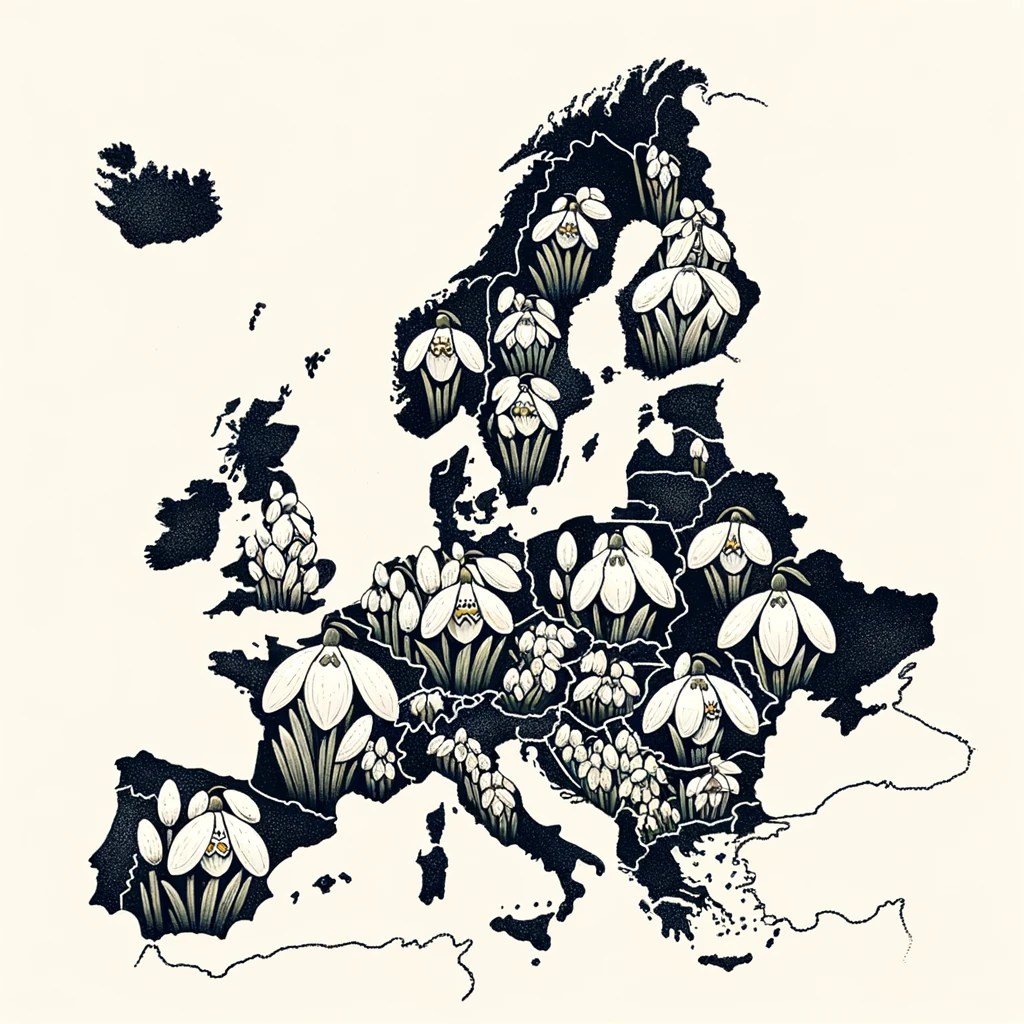

Snowdrops (Galanthus) are primarily native to a wide swath of Europe and the Middle East, showcasing a remarkable adaptability to various climatic zones within these regions. Their natural habitat extends from the Pyrenees in the west, through various parts of Central and Eastern Europe, reaching as far east as Iran. Countries like Turkey, Ukraine, and Georgia are known for their rich biodiversity of Galanthus species, hosting a variety of endemic species that have adapted to the unique ecological niches within these regions.
In the British Isles, Snowdrops are not native but have become naturalized over centuries, often found carpeting woodland floors and riverbanks. This wide distribution is a testament to the resilience and adaptability of Snowdrops, thriving in deciduous woodlands, meadows, and even in more alpine regions, provided the conditions mimic their native habitats of damp, nutrient-rich soils.
Factors Influencing Distribution
The distribution of Snowdrops is influenced by a combination of climatic, soil, and human factors. Climatically, Snowdrops favor temperate conditions with distinct seasonal variations, which align with their growth cycle of flowering in late winter or early spring. They require a period of cold dormancy to bloom, making their presence less common in warmer climates without a cold winter season.
Soil conditions play a crucial role, with Snowdrops preferring moist, well-drained soils rich in organic matter. They are commonly found in deciduous woodlands where the soil is enhanced by leaf litter, providing the nutrients necessary for growth.
Human activities have both positive and negative impacts on the distribution of Snowdrops. While cultivation and gardening have spread Snowdrops to new areas, habitat destruction and the illegal trade of wild bulbs, particularly of rare species, pose significant threats to their natural distribution.Migration and Expansion
The expansion of Snowdrop populations beyond their native range is a story of both natural processes and human intervention. In their native habitats, natural mechanisms such as water flow and animal activity facilitate the spread of seeds and bulbs to new areas. However, the significant spread of Snowdrops into non-native regions is largely attributed to human actions.
Gardeners and horticulturists have been instrumental in the migration of Snowdrops, valuing them for their early blooming and aesthetic appeal. This has led to the intentional planting and naturalization of Snowdrops in gardens, parks, and woodlands far from their native range. In some cases, such as in the British Isles, Snowdrops have become so integrated into local ecosystems that they are often mistakenly thought to be native.Conservation Status
While Snowdrops are not currently listed as a globally endangered species, certain species within the Galanthus genus face significant threats that could impact their long-term survival and distribution. Habitat loss due to agricultural expansion, urban development, and climate change poses the most significant threat to Snowdrop populations, particularly those in specialized or isolated habitats.
The illegal trade of Snowdrop bulbs, driven by their popularity and the rarity of some species, has led to the overharvesting of wild populations, endangering their natural distribution. In response, some species of Snowdrops are listed on Appendix II of the Convention on International Trade in Endangered Species of Wild Fauna and Flora (CITES), regulating their trade to protect them from over-exploitation.
Conservation efforts are in place in various countries to protect these delicate harbingers of spring. Initiatives include the creation of protected areas, cultivation of Snowdrops in botanical gardens for reintroduction projects, and public education campaigns to discourage the purchase of bulbs harvested from the wild.
FAQs
Where are Snowdrops most commonly found?
Snowdrops are predominantly found in Europe and the Middle East, with significant populations in the Caucasus, Turkey, and parts of Eastern Europe.
- What factors determine where Snowdrops can grow?
- The growth of Snowdrops is influenced by climatic conditions (temperate climates with cold winters), soil type (moist, well-drained soil rich in organic matter), and human activities (gardening and habitat modification).
- How have Snowdrops spread beyond their native range?
- Beyond natural dispersal methods like water and animals, human activities, particularly gardening and the horticultural trade, have significantly contributed to the spread of Snowdrops.
- Are some species of Snowdrops at risk of extinction?
- While the genus Galanthus as a whole is not endangered, specific species and varieties are under threat due to habitat destruction, climate change, and illegal bulb trading.
- Is it legal to trade Snowdrop bulbs internationally?
- The international trade of certain Snowdrop species is regulated under CITES to prevent over-exploitation, and traders need appropriate permits to legally buy and sell these plants.
- Can climate change affect the distribution of Snowdrops?
- Yes, climate change can impact Snowdrops by altering their flowering time, affecting their pollinators, and changing the suitability of their habitats, potentially leading to a shift in their geographical distribution.
- What conservation measures are being taken to protect Snowdrops?
- Conservation measures include habitat protection, legal regulation of trade, cultivation in botanical gardens for conservation, and public awareness campaigns to discourage illegal bulb collection from the wild.
- How can individuals participate in the conservation of Snowdrops?
- Individuals can support Snowdrop conservation by planting them in their gardens from ethically sourced bulbs, supporting habitat conservation initiatives, and avoiding the purchase of bulbs collected from the wild.
Learn more about Snowdrop Essentials
 Snowdrop Garden