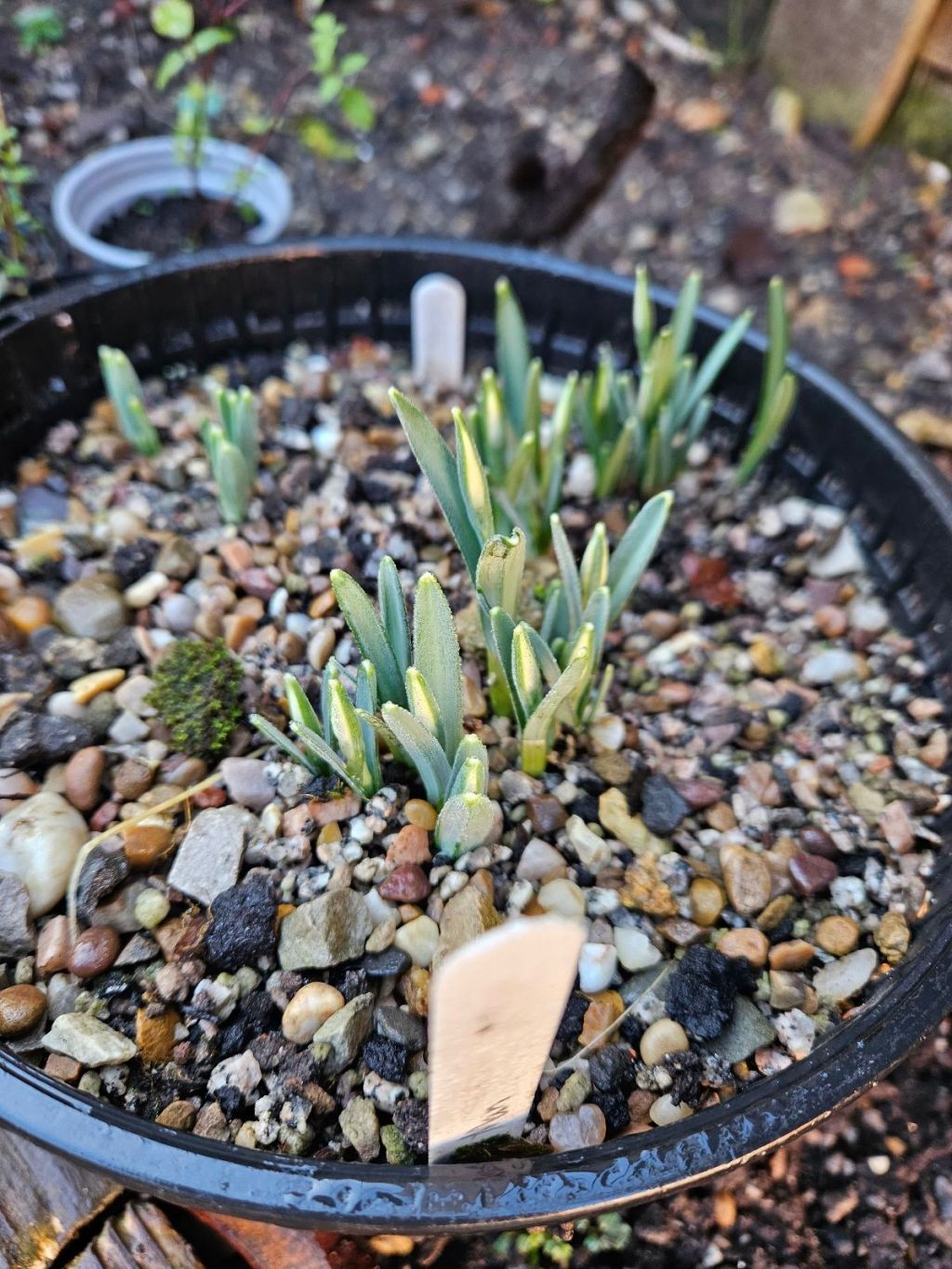
Growing snowdrops in pots, baskets, or directly in the garden each has its benefits and challenges.
Here’s a summary of your options:
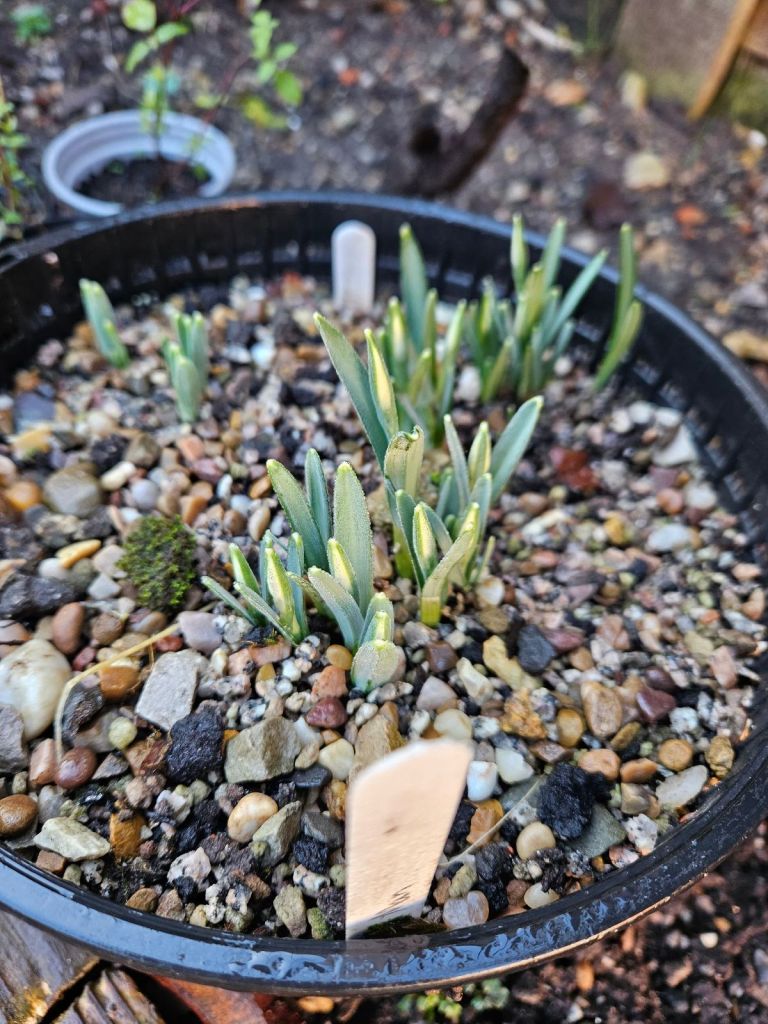
Snowdrops in Pots
- Pros:
- Ideal for collectors’ varieties, offering protection and easy display.
- Easier to control the growing environment (soil, watering).
- Useful for growing less hardy varieties in greenhouses or cold frames.
- Facilitates admiration of special varieties and their unique details.
- Cons:
- Requires a precise watering regime.
- Pots can be prone to temperature fluctuations, needing protection in winter.
- Yearly repotting may be necessary to replenish nutrients and check bulb health.
- Choice between clay and plastic pots, each with distinct watering needs.
Snowdrops in Baskets
- Pros:
- Baskets can be used to neatly organize and display snowdrops.
- Can be sunk into garden soil, allowing for water and nutrient absorption while still being protected.
- Facilitates lifting and dividing of snowdrops when dormant.
- Cons:
- Regular maintenance such as lifting, dividing, and repotting required.
- May need protection from frost depending on the location.
Planting Snowdrops Directly in the Garden
- Pros:
- More natural growth and spread, ideal for creating larger displays.
- Lower maintenance once established.
- Can naturalize in grassy areas for a beautiful display.
- Cons:
- Risk of bulbs being eaten by animals like squirrels.
- Harder to control growing conditions compared to pots or baskets.
- Can be more challenging to protect special varieties.
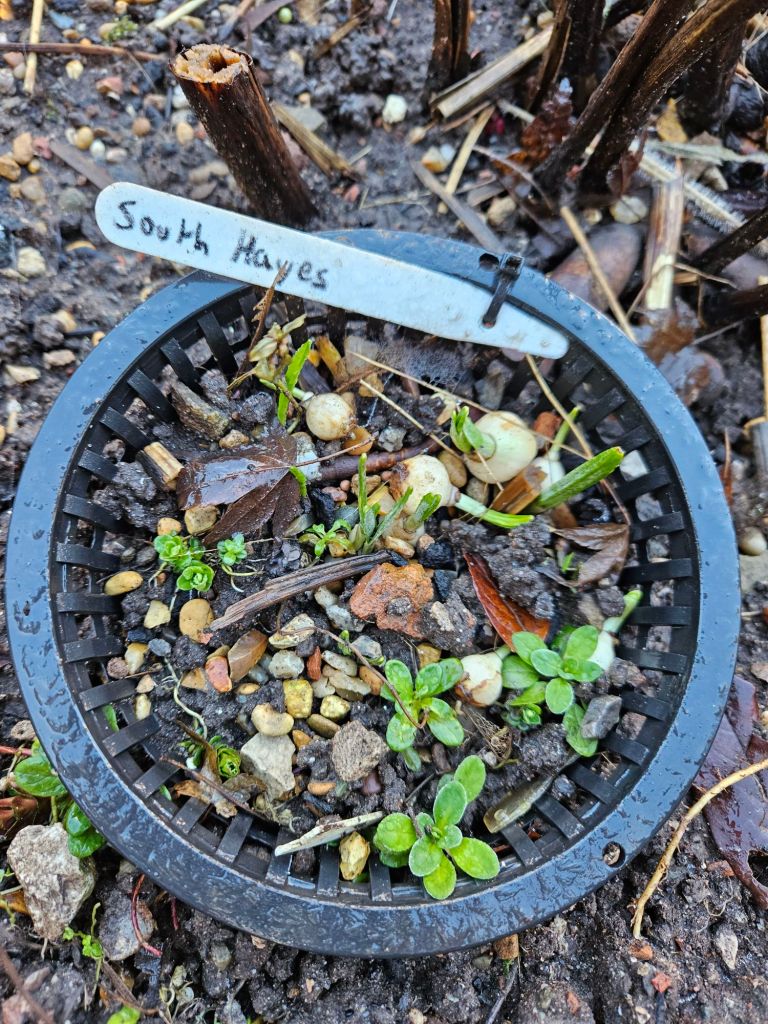
- As with pots, if snowdrops are not divided or reported into larger baskets they can become so full the bulbs end up above the soil! Which is really not ideal as seen in the photo below.
General Care Tips
- Soil: Use well-drained, humus-rich soil. For pots, a mix of peat-based potting compost and vermiculite is common.
- Watering: Varies by climate; generally less during dormancy and more in growth phases.
- Temperature: Protect from extreme cold. Use frost-free greenhouses or plunge pots into sand for insulation.
- Light: Snowdrops need good light but not dense shade.
When choosing between pots, baskets, and garden planting, consider factors like the varieties you’re growing, your climate, and how much time you can dedicate to maintenance. Each method has its unique requirements and benefits, so it’s important to choose what works best for your gardening style and the specific needs of your snowdrops.
 Snowdrop Garden